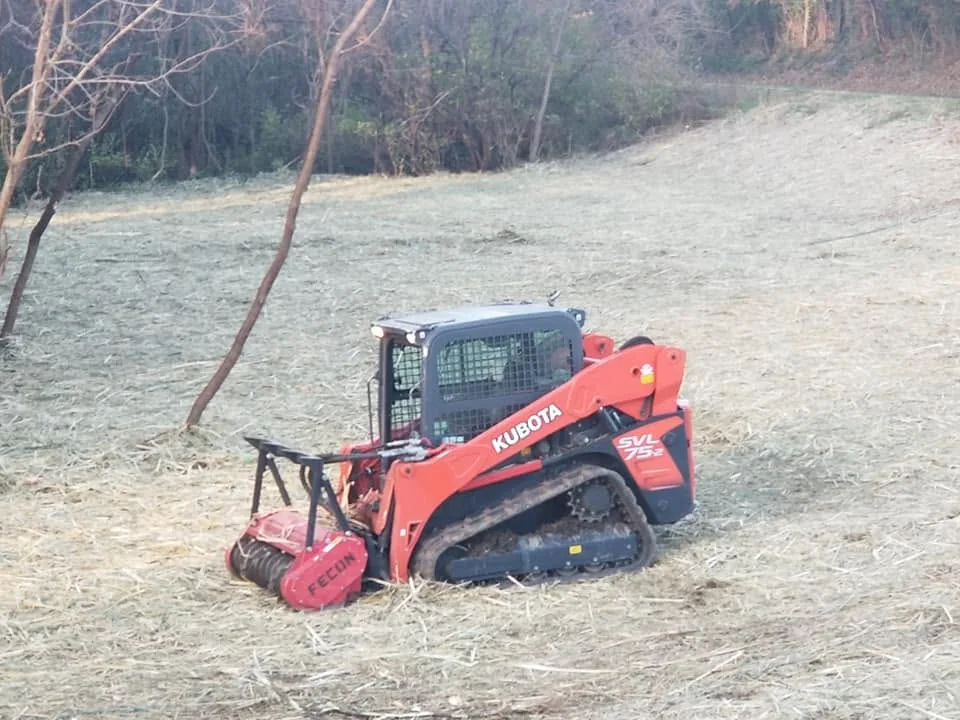
If brush, tall grass, and saplings have taken over your field or fence line, professional brush hogging can make the property safer, easier to use, and easier to maintain before winter. A heavy-duty rotary cutter knocks down growth that a standard mower cannot handle, while a site walk helps identify rocks, stumps, old fence posts, and drainage hazards before work starts.
For Green Acres Outdoor Services, the goal is not to cut every property the same way. The right cutting height, equipment, and follow-up plan depend on the vegetation, terrain, and how you use the land. Here are five practical benefits of scheduling brush hogging as part of your fall property plan.
1. You Get Better Access to Fields, Fences, and Open Ground
Overgrowth can hide the parts of a property you need to reach most. Tall grass and woody brush can cover a fence line, narrow an access lane, or make it hard to inspect a pasture after storms. A rotary cutter opens those areas back up without treating the whole property like a finish-mowed lawn.
That access matters in winter. You may need to check gates, reach a pond, move equipment, inspect drainage, or walk a boundary. Clearing the growth gives you a better view of problems hidden during the growing season.
The first pass is about visibility, not appearance
A brush hog leaves cut material on the ground instead of producing a lawn finish. That is often right for fields, pastures, vacant acreage, and fence rows.
Pro Tip: Tell the operator how you plan to use the property after cutting. A pasture, hunting access lane, building site, and property listed for sale may need different cutting heights and cleanup plans.
A site walk helps prevent equipment damage
Green Acres starts by looking for hidden obstacles such as rocks, stumps, buried debris, drainage channels, and old posts. Finding those hazards before the rotary cutter enters the field protects the equipment and helps the operator plan a safer route.
2. You Can Stay Ahead of Regrowth Instead of Reclaiming It Later
Brush control is easier when a field is maintained before the growth becomes dense and woody. Once a property has been ignored for multiple seasons, the work can involve heavier vegetation, more obstacles, and a longer recovery plan.
A recurring schedule may be a better fit than a single emergency cleanup. Green Acres says established pastures and open fields often need two to three mowing visits during the growing season, while fence rows and property edges may need one visit each season after the first heavy overgrowth is knocked back.
The schedule varies by rainfall, soil, vegetation, and how the property is used. Match maintenance to the property instead of waiting until access disappears.
Brush hogging is not the same as full land clearing
Brush hogging is designed for tall grass, weeds, brambles, light woody brush, and small saplings. It is not a substitute for removing large trees, stumps, or dense wooded growth. If the site has established honeysuckle thickets or heavier tree cover, forestry mulching or land clearing may be a better match.
The USDA Natural Resources Conservation Service brush management guide also treats mechanical work as one part of a larger management plan. The method should fit the target plants, the desired land use, and the follow-up needed after treatment.
3. You Support Better Pasture and Field Management
Removing excess brush can reduce competition for light and space around desirable grasses. That does not mean every pasture should be mowed on the same schedule. Illinois Extension explains that mowing decisions depend on pasture history, grazing practices, weed pressure, and stand condition in its pasture management guidance.
Use brush hogging as one tool, not a promise that one pass solves every vegetation problem. If the property supports livestock, soil and forage conditions should guide cutting height and timing.
Timing matters for fall work
Fall is a planning window, not an automatic permission to cut every field. Wet ground can rut under heavy equipment, and some forage stands need rest before winter. The operator should review ground, vegetation, drainage, and intended use before recommending a date.
If your property is already too wet for equipment, the right answer may be to wait. A short delay is better than trading overgrowth for deep ruts and avoidable soil damage.
Did You Know? Illinois Extension describes mechanical mowing as a possible weed-control tool, but it also warns that the result depends on pasture history and grazing management. A property-specific plan beats a calendar-only approach.
4. You Reduce Winter Access Problems
Winter weather can turn a narrow route or hidden gate into a bigger problem. Snow, ice, fallen limbs, and wet ground are easier to manage when the edges of a field or access lane are visible before the season starts.
Brush hogging will not remove every winter hazard, and it does not replace snow removal. It can, however, help open the areas that need to stay accessible. Green Acres also offers commercial snow removal for businesses, property managers, and municipalities in the Metro East.
For rural property owners, the fall checklist may include:
- Opening the route to a gate, pond, or equipment area.
- Clearing vegetation from the sides of a fence line.
- Identifying stumps, rocks, and drainage crossings before leaf cover or snow hides them.
- Deciding whether cut material can remain in place or needs raking and haul-away.
- Scheduling any follow-up work for heavier brush or invasive growth.
5. You Start Spring With a Clearer Maintenance Plan
A fall brush-hogging visit can give you a better starting point for next season. Once the tall growth is down, it is easier to see where regrowth is strongest, where a fence needs repair, and where the property needs a different service.
It also helps separate routine maintenance from a larger clearing project. A field that responds well to rotary cutting may only need seasonal brush control. A wooded edge that keeps returning with honeysuckle or dense woody growth may need invasive honeysuckle removal or a more intensive clearing method.
Ask for a plan, not just a price
Before work begins, ask what equipment will be used, what height is recommended, whether cut material will stay on the ground, and what the operator found during the site walk. Those answers tell you what the finished property will look like and what work may be needed next.
At Green Acres, the estimate starts with the property itself. Owner Clint Green operates the business and handles the equipment, giving the person quoting the work a direct view of the site conditions.
When Should You Schedule Brush Hogging in Illinois?
The best timing depends on ground conditions, vegetation, and your property’s use. October is a smart time to inspect fields, fence rows, and access lanes, but wet ground or a pasture that needs rest may change the schedule. A site visit is the safest way to decide whether to cut now, wait, or use a different service.
Is Brush Hogging Enough for Winter Property Preparation?
Brush hogging can improve access and visibility, but it is not a complete winter plan. Larger trees, stumps, heavy honeysuckle, wet-ground problems, and snow removal may call for different work. A property assessment can identify which tasks belong together and which should wait.
Does Brush Hogging Remove Cut Material?
Usually, cut material stays on the ground to decompose. Green Acres says raking and haul-away can be arranged when a cleaner finish is needed for a sale, event, or property with significant debris mixed into the growth. Discuss cleanup during the estimate.
How Often Does a Property Need Brush Hogging?
Established fields and pastures often need two to three visits during the growing season, while fence rows and property edges may need seasonal maintenance after initial reclamation. The right frequency depends on regrowth, rainfall, soil, and how the land is used.
What If the Brush Is Too Heavy for a Rotary Cutter?
Dense wooded growth, established honeysuckle, large trees, and stumps may need forestry mulching or land clearing instead. Green Acres can review the vegetation and recommend the equipment that fits the property.
Fall is a useful time to look at the parts of your property that became hard to reach during the growing season. Professional brush hogging can restore access, expose hidden obstacles, and give you a clearer plan for the next season without treating every acre like a lawn. Green Acres Outdoor Services provides brush hogging and brush removal across Troy, Madison County, St. Clair County, and the Metro East. Request a free estimate for your property, and ask what should be cut, what should stay, and what needs a different approach.