Forestry mulching is often discussed as a faster alternative to pile-and-haul clearing. Its real value is more specific: it changes standing vegetation into smaller material at the work area. That can simplify handling, but it does not automatically create a driveway, building pad, pasture, or finished lawn.
Green Acres Outdoor Services’ verified target route for this brief is the services page. Use it for a quote conversation and describe the property, vegetation, access, desired finish, and any Illinois location details that may affect planning.
What is forestry mulching?
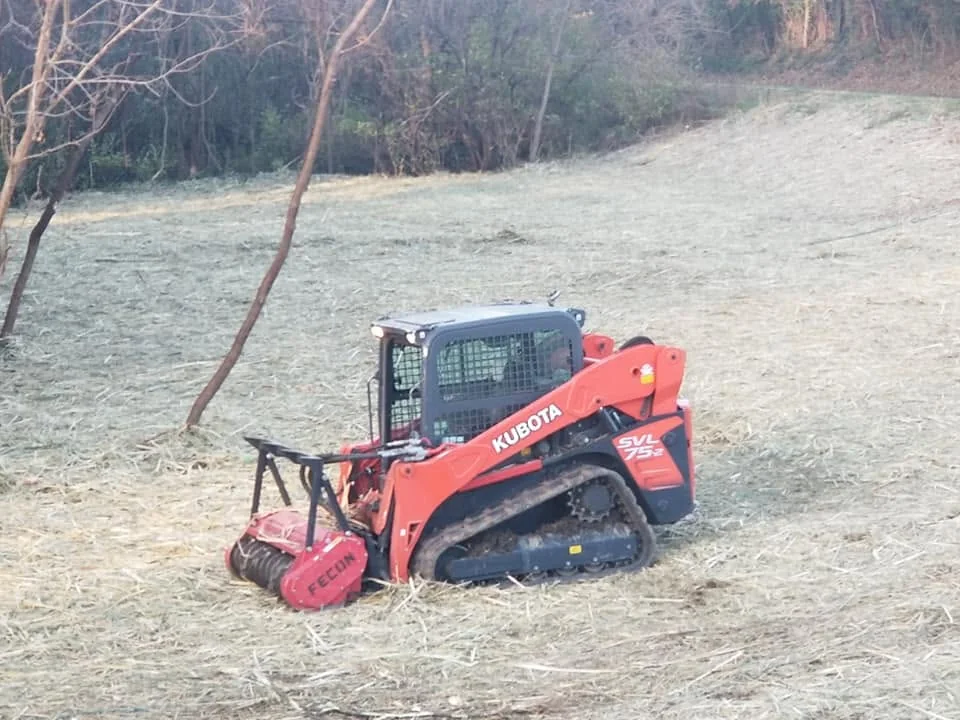
A forestry mulcher mounts a rotating drum or similar cutting head to a carrier machine. Teeth or knives cut woody growth and process it into smaller pieces. The material is spread across the work area rather than loaded into a separate brush pile by default.
For general context, review USDA Forest Service land-management resources and Illinois EPA environmental information. These sources do not replace local permitting or a site-specific review.
The method works best when the owner is clear about the finish. A rough opening, trail, fence line, view corridor, and future building area each need a different plan. Surface mulch may be useful, but roots, stumps, rocks, wet soil, and grade changes can remain.
What can a drum mulcher handle?
Capacity depends on the machine, head, vegetation, terrain, access, and ground conditions. Light brush and smaller trees may be suitable. Larger trees, wire, buried debris, rocks, steep slopes, and wet ground call for a site review and a careful work plan.
Did You Know? Leaving mulch in place reduces one hauling decision, but it does not remove the need to plan drainage, access, final grade, or the next land use.
What does it not do?
Forestry mulching does not guarantee complete stump removal, deep root removal, construction-grade compaction, or a finished seedbed. A project may need grading, stump work, soil preparation, erosion controls, or another clearing method after the mulcher leaves.
How does the forestry mulching process work?
A clear process keeps the work focused and makes the finished result easier to judge.
- Walk the property. Identify the work area, slopes, wet spots, structures, fences, utilities, rocks, and features that must remain.
- Mark the limits. Separate the area to mulch from buffers, boundary lines, protected trees, drainage features, and neighboring property.
- Plan entry and staging. The carrier machine needs a stable route. Transport access and turning space also matter.
- Process the vegetation. The operator makes controlled passes, changing the approach for density, size, terrain, and ground conditions.
- Review the finish. Check for missed growth, ruts, exposed hazards, uneven mulch, and spots that need another service.
- Plan the next step. Decide whether the property needs grading, stump treatment, access work, seeding, or erosion controls.
Why access changes the result
A machine can only work where it can safely reach. Narrow gates, soft shoulders, overhead branches, steep slopes, and nearby structures may limit the route. Illinois properties can also vary from open lots to wooded edges and wet low areas, so a generic machine promise is not enough.
Pro Tip: Put the expected finish in writing. “Vegetation reduced” is not the same as “ready for a driveway” or “ready for a building pad.”
Forestry mulching compared with traditional clearing
Traditional clearing may cut, push, pile, load, and haul material away. Forestry mulching processes much of the vegetation in place. The better method depends on the outcome, not on a claim that one method fits every property.
Mulching may suit a brushy lot, access path, or wooded edge where surface material can remain. Full mechanical clearing may fit a project that needs tree removal, stump extraction, mass grading, or a clean construction area. Hand work may be better near tight features or protected areas.
The finish also affects cost. If the next use requires a smooth grade, a seedbed, a foundation area, or a drainage feature, follow-up work may be needed after mulching. Ask for the complete sequence rather than comparing only the first machine visit.
For broader service information, the Green Acres Outdoor Services homepage is a verified internal route. A dedicated Illinois permitting article is pending verification and is not represented as a live page.
What affects forestry mulching cost?
Cost depends on the amount and type of vegetation, access, terrain, desired finish, and follow-up needs. Tree density alone does not tell the full story.
Vegetation and debris
Dense brush, vines, larger stems, fencing, rocks, and buried debris can slow the work or change the method. Tell the contractor about old wire, structures, dumped material, or anything hidden in the growth.
Terrain and soil
Slopes, wet ground, soft soil, and drainage paths affect machine access and production. A property may need a different sequence to reduce rutting or protect water flow. Weather can also change whether the site is workable.
The next land use
A rough opening can have a different scope from a future lawn, pasture, driveway, or building site. Ask whether the quote includes a second pass, stump treatment, grading, hauling, soil preparation, or erosion work.
Local Illinois considerations
Rules vary by municipality, county, watershed, project type, and protected resource. Before clearing, check applicable local requirements, burn restrictions, stormwater controls, and any rules tied to wetlands or waterways. The owner should confirm approvals for the parcel and project.
Did You Know? A method that leaves material on site can still need a drainage plan. Mulch should not be placed where it blocks a swale, inlet, access route, or future work area.
How should Illinois property owners prepare?
Gather the property boundary, survey or site plan, utility information, well and septic locations, access instructions, and any local approval details. Mark trees, fences, drainage features, or areas that must remain. Remove personal items from the work zone.
Tell the contractor what should happen to the mulch. If it stays, identify areas where it may be spread without affecting drainage or future work. If material must leave, discuss loading, hauling, and disposal as part of the scope.
Ask how unexpected conditions will be handled. Rock, wire, buried debris, wet soil, large trees, or slope changes can affect the estimate. A written change process gives the owner a clear way to approve a different method.
FAQs about forestry mulching
Is forestry mulching good for every Illinois property?
No. It may suit some brushy or wooded areas, but terrain, soil, access, vegetation size, local rules, and the desired finish can change the recommendation. A site review is the best way to match method to property.
Does forestry mulching remove stumps?
Not automatically. Surface vegetation can be processed while stumps and roots remain. If the next land use needs a smoother or deeper finish, ask whether stump grinding, excavation, grading, or soil preparation is included.
Is forestry mulching cheaper than traditional clearing?
It can reduce some loading and hauling, but cost depends on vegetation, access, terrain, finish, and follow-up work. Compare complete scopes rather than the price of one machine visit.
How do I request a forestry mulching quote?
Share the property location, work area, vegetation, access route, desired finish, and known hazards. Contact Green Acres through the verified services page for a project-specific conversation.
Choose the finish before choosing the machine
Forestry mulching can be a practical way to reduce woody growth and process material on site. It works best when the work limits, access, safety concerns, expected finish, local requirements, and next step are clear before scheduling.
For a quote, contact Green Acres Outdoor Services through the verified services page. Share enough site detail for the team to discuss whether in-place mulching fits the property and what follow-up work may be needed.